


After printing

How to Care for Fine Art Prints

Pigment inks and fine art materials are chosen for serious presentation, but no print is immune to its environment. Good handling and display choices protect the appearance of the work over time.

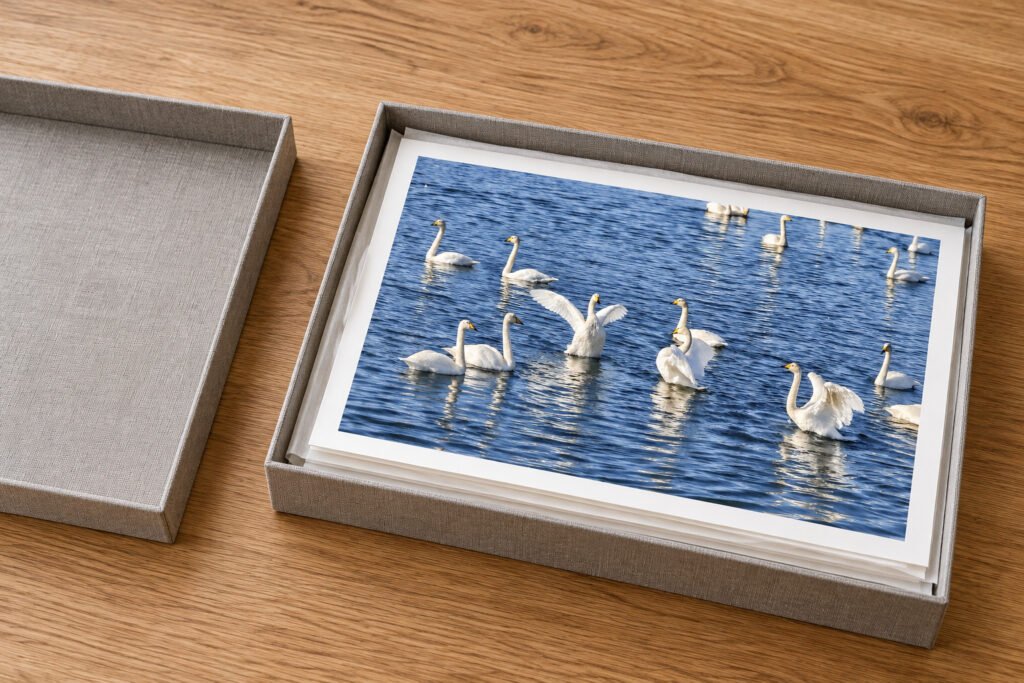
Fine art prints stored flat in an archival box with tissue interleaving and cotton gloves

The basics

Four habits that protect a print

Gloved hands lifting the corner of a matt cotton print on an inspection table

Handle the surface sparingly

Clean, dry hands or suitable gloves. Hold unframed paper by its edges, support larger sheets with both hands and avoid touching the printed face.

Living room wall with a group of three framed monochrome photographs

Think about light and humidity

Avoid strong direct sunlight, damp walls, condensation and heat sources. Judge colour under the light where it will normally be seen.

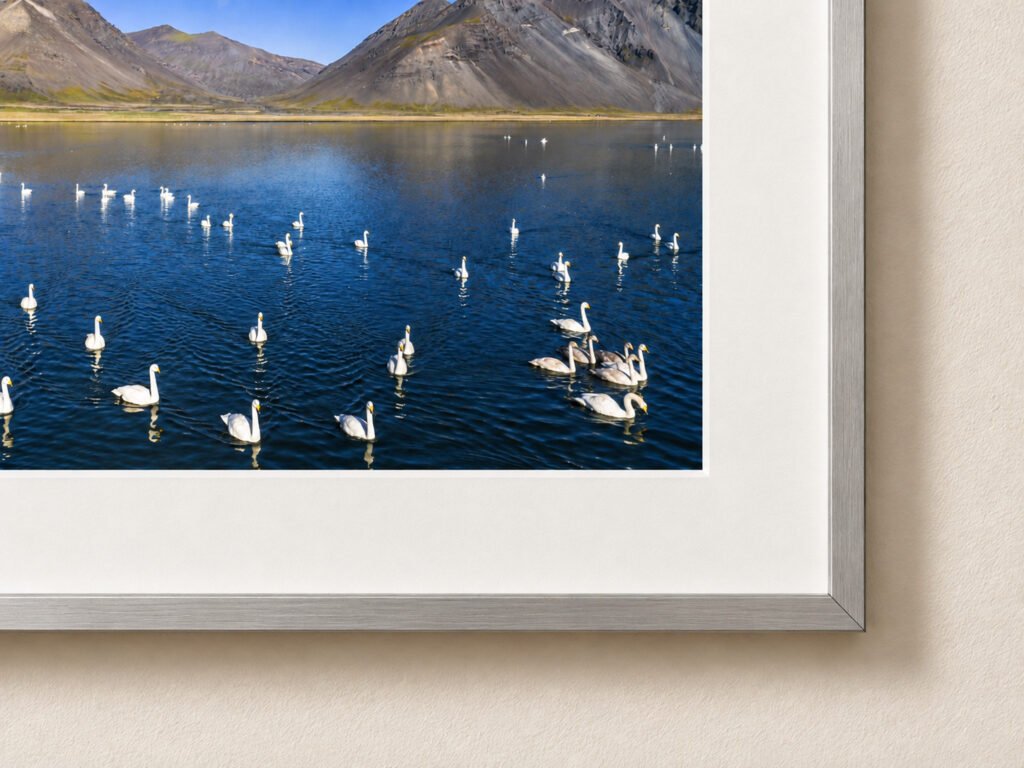
Close view of a slim silver aluminium frame corner showing its depth

Ask what touches the print

Discuss materials next to the paper or canvas, spacing from glazing and support. Specific conservation components are confirmed per frame.

Fine art prints stored flat in an archival box with tissue interleaving and cotton gloves

Store unframed prints carefully

Protect from abrasion, moisture and pressure; keep flat when size permits. Ask about materials suited to the exact medium.

Fine art prints stored flat in an archival box with tissue interleaving and cotton gloves

Longevity

No universal lifespan number

Longevity depends on the ink, paper or canvas, coatings, framing, lighting and environment. A broad number from another studio or media combination is not a guarantee for this print. For a valuable edition or collection, document the materials and display conditions.